Official Government impact modelling warns some landlords may sell up or pass compliance costs on through higher rents.
26th Jan 20261 760 1 minute read Simon Cairnes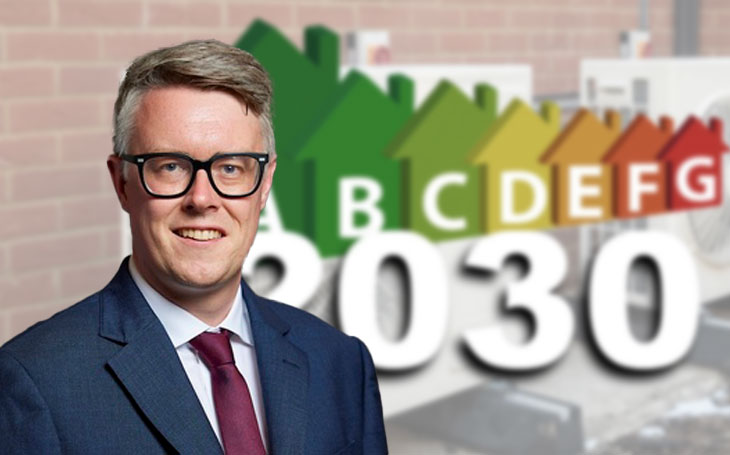
Ministers have insisted plans to tighten energy efficiency rules in the private rented sector “should not require landlords to increase rents”, despite a government impact assessment warning that some costs could still be passed on to tenants.
 Paul Holmes, Conservative MP, Hamble Valley
In a written question, Conservative MP Paul Holmes asked the Department for Energy Security and Net Zero whether it had assessed the potential impact of the costs of new energy efficiency measures on the level of open market rents.
ConsultationResponding, Parliamentary Under Secretary Martin McCluskey (main picture) said the Government has “recently consulted” on raising minimum energy efficiency standards in the domestic private rented sector, including proposals for rented homes to achieve Energy Performance Certificate C (EPC C) or equivalent by 2030.
McCluskey said the Government has “engaged with landlord and tenant groups” in developing the policy and had set out “several proposals” to help landlords reach the new standard.
Our proposed changes should not require landlords to increase rents.”
He added: “Our proposed changes should not require landlords to increase rents. Instead, they will help tenants cut their energy bills by delivering more energy-efficient homes.”
However, the Government’s own “Improving the Energy Performance of Privately Rented Homes” impact assessment, published alongside the consultation, warns that some landlords could “exit the market” if compliance costs outweigh returns, while others may attempt to “pass costs onto tenants via higher rents”
The assessment also concedes that in 2023–24, around 32% of private renters already reported finding their rent “fairly or very difficult to afford”, meaning any further increase could prove difficult for households to cope with.
According to McCluskey, the consultation has now closed, and the Government is “analysing responses and reviewing evidence” on the potential impact of the proposals, with a formal response to be published “in due course”.
TagsMinimum Energy Efficiency Standards (MEES) 26th Jan 20261 760 1 minute read Simon Cairnes Share Facebook X LinkedIn Share via Email